
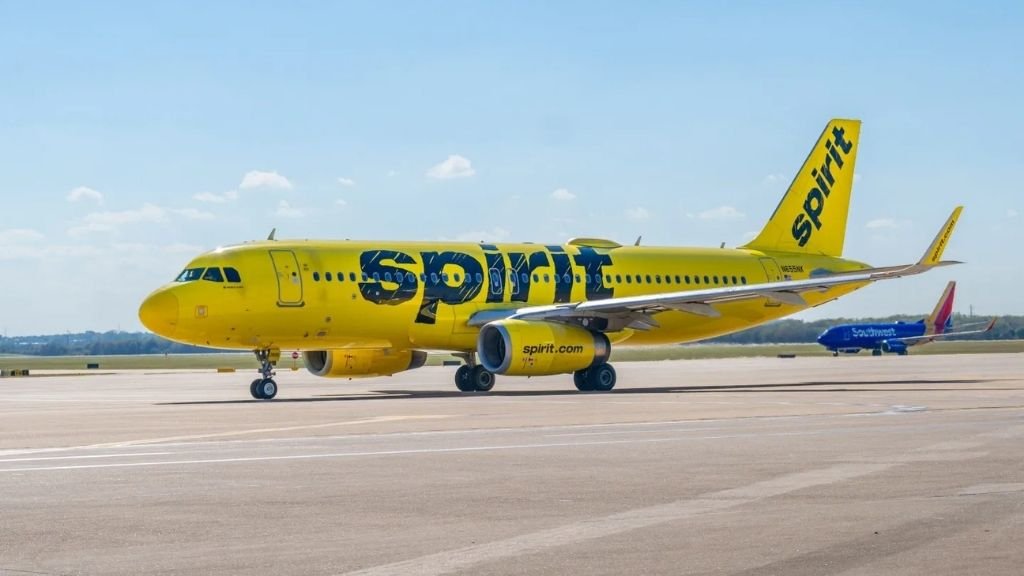
Spirit Airlines is one of those companies that makes people ask a simple but complex question: how does a well-known airline get this close to financial trouble when the warning signs are all there?
And more specifically, could credit ratings have saved it?
The honest answer is no. But the more valuable answer is that credit ratings were already telling the story long before most people noticed something was wrong.
It started, as it often does in airline credit stories, with a strong growth narrative. Spirit’s ultra-low-cost model was built on density, discipline, and ancillary revenue. On paper, it looked efficient. In reality, it was a model that only really works when demand is strong, costs are stable, and competitors behave rationally.
That balance did not hold.
Over time, margins tightened. Costs rose. Competition intensified, not just from other low-cost carriers, but also from larger airlines that learned how to match low fares while cross-subsidising from premium cabins. Spirit’s pricing power weakened, and the business that once depended on scale and efficiency started to feel structurally exposed.
The credit markets noticed.
Spirit had always sat in speculative-grade territory, but what mattered was not the label; it was the direction of travel. The tone of the credit narrative shifted gradually from “high risk but manageable” to something more concerning: “Liquidity pressure is building.”
As time went on, the signals became sharper:
- Earnings volatility stopped being cyclical and started looking structural
- Cash generation became inconsistent and then negative
- Debt levels remained high even as operating performance weakened
- Refinancing assumptions became more fragile in a higher interest rate environment
Credit opinions followed that trajectory downward. The language became less about risk in the abstract and more about timing; how long liquidity could hold and whether refinancing would arrive in time.
At that stage, the message was no longer subtle. It was essentially saying the cushion is shrinking.
But markets rarely move in sync with warnings.
Even as credit signals deteriorated, the broader narrative around airlines still carried a post-pandemic recovery mindset. Investors and operators alike tended to interpret weakness as cyclical rather than structural. That gap between what credit analysis was signalling and what the market was willing to believe is where the story becomes more interesting.
Because credit ratings do not force outcomes. They only describe risk as it evolves.
Operationally, Spirit’s challenges kept compounding. Costs remained sticky. Competitive pressure did not ease. And the company increasingly relied on financial flexibility rather than earnings strength to stay afloat. In credit terms, that is a dangerous transition: from “profits funding debt” to “debt sustaining survival”.
Once a company enters that phase, ratings can highlight the stress, but they cannot reverse it.
By the time Spirit’s credit profile moved deeper into distressed territory, the narrative had already changed. It was no longer about growth strategy or competitive positioning—it was about liquidity, refinancing and whether the capital structure could survive the operating reality.
Credit signals were not late; they were early. But early warnings are only useful if they trigger early action.
Perhaps the most relatable way to think of this is:
Credit ratings are like a dashboard warning light in a car.
They do not fix the engine.
They do not stop the car.
They just tell you something is getting worse under the hood.
Whether the car makes it to safety depends on what happens next, speed, distance and whether anything is done about the problem early enough.










Leave A Comment