
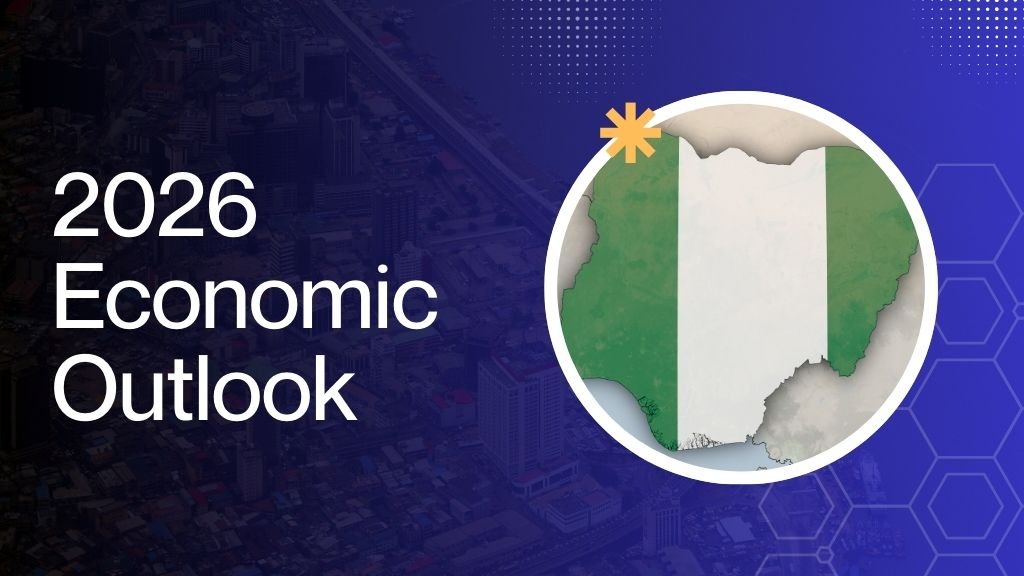
Nigeria enters 2026 at a delicate inflection point. Following two years of far-reaching monetary, exchange rate, and fiscal reforms, macroeconomic indicators are showing early signs of stabilisation. Yet, beneath these gains lie deep-seated structural challenges that will ultimately determine whether the economy can transition from stabilisation to sustained, inclusive growth.
Against this backdrop, insights from leading experts and analysts, including Ugo Obi-Chukwu of Nairametrics, alongside signals from the 2026 Federal Budget and the Central Bank of Nigeria (CBN), offer a balanced lens through which to assess Nigeria’s economic prospects.
Growth Outlook: Optimism Tempered by Structure
The IMF projects Nigeria’s GDP growth at 4.2%–4.3% in 2026, driven largely by stronger household demand. However, structural constraints suggest that near-term growth may remain capped.
Mr Obi-Chukwu believes that Nigeria has historically struggled to break above the 5% growth threshold without a sustained combination of lower inflation, rising real wages, and significantly higher capital spending. In his view, absent these conditions, real GDP growth is likely to remain below 5% in 2026.
Recent data suggests moderate momentum. The President disclosed that GDP grew by 3.98% in Q3 2025, up from 3.86% in Q3 2024, while the CBN estimated full-year 2025 growth at 3.89%, compared with 3.38% in 2024, attributing this to “the crystallisation of gains from broad-based reforms and rising business confidence.”
Inflation, Monetary Policy and Macroeconomic Stability
Inflation control remains central to the Government’s first budget objective: Consolidating Macroeconomic Stability. The CBN has maintained a tight monetary stance over the past two years to anchor inflation expectations and restore policy credibility.
While easing inflation could gradually reduce lending rates and improve credit conditions, Mr Obi-Chukwu is clear that monetary easing alone will not unlock rapid growth. According to him, “pushing growth will require not just lower interest rates and a stable exchange rate; it also needs larger capital spending and drastically reduced insecurity.”
The CBN echoes cautious optimism, noting that inflation moderated for most of 2025 due to “the lagged effect of the tight monetary policy stance of the Bank, improved fiscal-monetary policy coordination, stability in the foreign exchange market, and the base effect.”
Oil Sector Dynamics and Fiscal Exposure
Oil sector performance remains a critical determinant of Nigeria’s fiscal and growth outlook. Production is projected to rise modestly to around 1.73–1.84 million barrels per day, supported by improved security and sector reforms.
The President noted that “oil production has improved, supported by enhanced security, technology deployment, and sector reforms.” However, oil prices are expected to remain moderate, exposing fiscal balances to downside risks.
Mr Obi-Chukwu highlights that while lower oil receipts may have a limited immediate impact on foreign exchange stability, the fiscal implications are significant. Oil revenues account for over 65% of total government revenue, and underperformance directly widens the deficit.
Fiscal Deficits, Debt and Investor Confidence
The 2026 Federal Budget, themed “The Budget of Consolidation, Renewed Resilience, and Shared Prosperity”, projects a budget deficit of ₦23.85 trillion, equivalent to 4.28% of GDP, with ₦15.52 trillion earmarked for debt servicing.
Nigeria’s debt profile remains tilted towards domestic borrowing, which currently accounts for about 51% of total debt. According to Obi-Chukwu, a debt crisis would only materialise in the event of a default—an outcome he considers unlikely. Nonetheless, aggressive debt servicing could crowd out growth-enhancing expenditure.
Revenue Mobilisation, Tax Reforms and Human Capital Spending
On revenue, the Government projects ₦34.33 trillion in total revenue for 2026, banking on improved tax administration and non-oil revenue expansion. The President noted that “non-oil revenues have expanded significantly through better tax administration.”
Experts, however, stress the limits of near-term gains: “The impact of tax reforms will be gradual and incremental.”
They warn that repeatedly taxing compliant firms could be counterproductive, while Nigeria’s non-oil tax-to-GDP ratio of just 2.3% underscores the scale of the challenge.
Beyond 2026: The Reform Imperative
Looking beyond the immediate horizon, experts emphasised the interdependence of reforms:
“They are all important and need to go hand in hand. Monetary policy reforms have already shown us how well-articulated and executed reforms can be a driver. But without fiscal and structural reforms, we will not see the impact.”
The government, for its part, has committed to “better revenue mobilisation, better spending, and better accountability”, with capital expenditure projected at ₦26.08 trillion—a critical lever if effectively deployed.
Nigeria’s 2026 economic outlook reflects cautious stabilisation rather than a decisive growth breakout. While inflation is moderating, reserves have strengthened, and reforms are beginning to bear fruit, growth remains constrained by fiscal pressures, security challenges, and limited revenue buffers.
As suggested by experts and analysts, the success of 2026 will hinge less on forecasts and more on execution—particularly the ability to convert stabilisation into productive investment, broaden the revenue base without stifling the private sector, and sustain reform momentum in a politically sensitive period.








Leave A Comment