
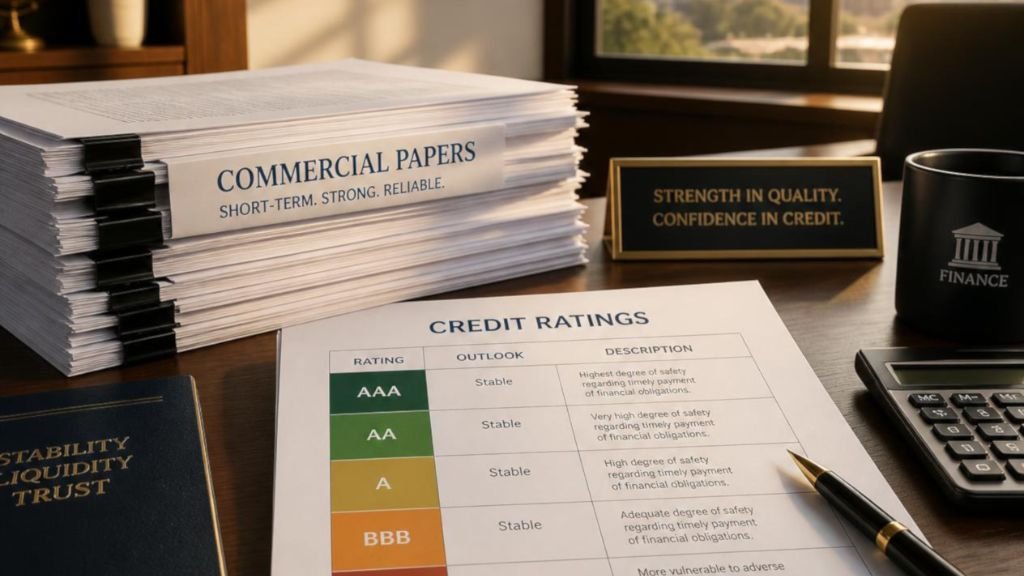
The Nigerian Commercial Paper (CP) market has changed significantly in recent years. What was once a relatively quiet corner of the Debt Capital Market has gradually become one of the preferred funding channels for corporates seeking short-term financing outside traditional bank lending. At the center of this evolution are three important forces: liquidity, investor confidence, and credit ratings.
In a recent interview session, Egie Akpata – Chairman of Skymark Partners- shared insightful perspectives on how these forces are shaping the market and why the growth of Commercial Papers reflects a broader maturation of Nigeria’s financial system.
The Rise of Commercial Papers
According to Mr. Akpata, one of the major drivers behind the increasing use of CPs is simply the natural evolution of the Nigerian financial market.
As markets mature, more companies begin to access the Debt capital market directly rather than depending solely on Banks. In developed markets such as the United States, Debt markets are deep because corporates have multiple financing options beyond conventional lending. Nigeria, he noted, appears to be moving gradually in the same direction.
Another important factor has been pricing. In 2024 and 2025, Bank lending rates had risen significantly above what many Issuers could obtain in the CP market. While Banks were lending at levels many corporates considered expensive, some highly rated Issuers were able to access funding at 5% – 10% cheaper through Commercial Papers. That gap naturally pushed more companies toward the market.
Interestingly, he observed that this trend is now beginning to moderate as Banks gradually reduce lending rates in response to competition from the debt market itself. In essence, the CP market has not only provided alternative funding, it has also indirectly influenced Bank pricing behavior.
Why Investors Keep Buying
One of the strongest themes from the discussion was liquidity.
Mr. Akpata explained that the current market environment contains substantially more liquidity than in previous years. Combined with the attractive spread between Treasury Bills and CP yields, this has increased investor participation in the market.
For many investors, the calculation appears straightforward:
- Treasury Bills may offer lower yields and zero risk,
- while CPs provide higher returns within a relatively familiar market structure.
This has contributed to the frequent oversubscription seen in many issuances. However, he cautioned that oversubscription is not always driven by fear of missing out. In many cases, Issuers intentionally understate how much they truly want to raise in order to avoid the optics of a poorly subscribed transaction.
The Relationship Between Yield and Risk
The conversation also touched on one of the oldest principles in finance: higher returns usually imply higher risk.
Yet, according to Mr. Akpata, the Nigerian CP market has recently shown a relatively narrow pricing range despite differences in Issuers. Most issuances tend to cluster within a fairly predictable band rather than reflecting extremely distressed pricing.
He explained that investors become uncomfortable when yields appear excessively high because unusually aggressive pricing can signal desperation or uncertainty around repayment.
An important distinction also exists between first-time issuers and repeat issuers. Companies with established repayment history and market familiarity tend to access funding more cheaply than unknown issuers still trying to build credibility.
Are Unsecured CPs Too Risky?
Commercial Papers are generally unsecured instruments and this naturally raises concerns around investor protection. Mr. Akpata acknowledged that while some CPs enter the market with guarantees or collateral support, the overwhelming majority remain unsecured. Surprisingly, he noted that instruments requiring heavy guarantees may actually indicate higher perceived risk.
His reasoning was simple: If an Issuer could comfortably raise funds without guarantees, it probably would. This shifts attention back to reputation, track record, and market confidence.
Credit Ratings: Important, But Not Sufficient
Perhaps the most revealing part of the discussion centered on credit ratings and investor behavior.
Mr. Akpata noted that ratings clearly matter; otherwise, Issuers would not pay for them. Ratings provide structure, visibility, and a level of comfort to the market. They help standardize risk assessment and support broader market participation. However, he was equally clear that sophisticated investors do not rely solely on ratings.
Many institutional investors still conduct their own independent due diligence, even when an Issuer carries a strong rating. Reputation, management quality, promoter credibility, and behavioral concerns often influence investment decisions just as strongly as financial ratios.
Could Nigeria Face a CP Market Crisis?
The discussion inevitably moved toward comparisons with the 2008 global financial crisis and whether similar risks could emerge in Nigeria’s CP market.
Mr. Akpata drew a sharp distinction between the two situations. The global crisis, he explained, was heavily linked to complex structured products, synthetic instruments and mortgage-backed securities that carried ratings many later considered overly optimistic.
Nigeria’s CP market, by contrast, remains relatively straightforward:
- mostly corporate issuers,
- relatively limited market size,
- and a growing but still manageable issuer base.
He also noted that the system currently contains several layers of filtering, including regulatory approval, rating requirements, investor scrutiny, and reputational assessment. Importantly, he pointed out that approval alone does not guarantee investor participation. Investors still ask questions, assess management credibility, and make independent judgments before committing funds.
One of the strongest takeaways from the interview is that Nigeria’s CP market reflects a broader transition in the financial system. The market is becoming more sophisticated, competitive, and increasingly dependent on information quality and investor confidence.
Credit ratings have played an important role in that development by helping issuers organize their financial structures and by giving investors a framework for assessing risk. But ratings alone do not drive the market; liquidity, reputation, investor psychology, monetary policy, and broader economic conditions all interact to shape outcomes.









Leave A Comment