
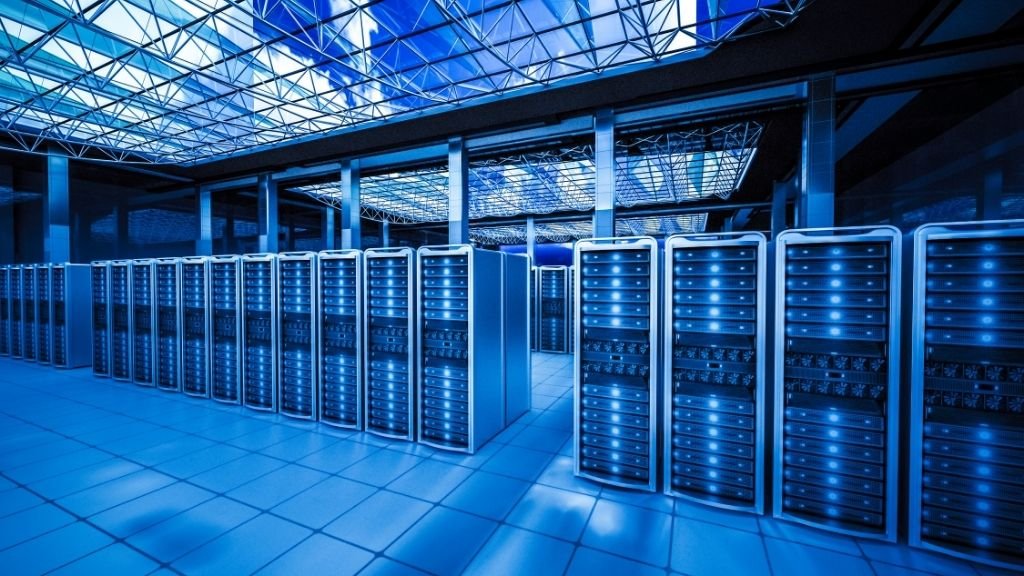
The Central Bank of Nigeria (CBN) recently issued a sweeping directive requiring banks, fintech firms, and other payment service providers to store payment transaction data generated within the country on local servers by January 1, 2027. This significant policy move is designed to strengthen regulatory oversight, enhance data sovereignty, and address the rapid, sustained growth in electronic payments and digital financial services across the nation. The mandate aligns with a broader global push to localize critical financial data and reduce reliance on offshore infrastructure. Ultimately, localized data policies serve as an immediate and powerful catalyst for domestic digital infrastructure, reinforcing the reality that artificial intelligence, cloud computing, and digital payments all rely on one critical piece of architecture working seamlessly behind the scenes: the data center.
Yet, while demand for digital infrastructure continues to surge, fueled by these regulatory developments and sweeping technological leaps; not every data center presents the same credit profile. Behind every successful facility lies a complex combination of operational resilience, technological adaptability, financial discipline, and sound governance. For lenders, investors, and rating agencies, the defining question is no longer whether the sector will grow; it is determining which operators are best positioned to convert that macroeconomic growth into sustainable financial performance and long-term credit strength.
Key Credit Rating Considerations
Data centers derive their fundamental value not merely from their physical footprint, but from their ability to deliver secure, reliable, and scalable digital services. Consequently, their credit profile is influenced by several interrelated factors that analysts closely monitor.
1. Structural Demand Must Translate into Stable Revenue The sector will continue to benefit from powerful structural tailwinds, including artificial intelligence, cloud computing, digital banking, e-commerce, streaming services, and government-led data localization initiatives. These macro trends support a sustained, baseline demand for computing and storage capacity, providing a highly favorable operating environment.
However, robust market demand alone is insufficient to secure a strong credit profile. Analysts meticulously assess whether operators can transform industry growth into predictable, high-quality earnings by evaluating:
-
Customer diversification and tenant concentration.
-
Revenue visibility secured through long-term, non-cancellable contractual arrangements.
-
The economic scalability of the underlying operating model.
-
The operator’s exposure to evolving competitive dynamics.
Operators anchored by a diversified, blue-chip client base and recurring revenue streams are structurally better positioned to maintain stable cash flows throughout varying economic cycles.
2. Operational and Technological Resilience Are Critical
A data center is only as valuable as its ability to remain continuously operational. Even brief service disruptions or latency issues can trigger significant financial penalties and inflict severe reputational damage. Consequently, credit assessments place considerable weight on an operator’s ability to maintain resilient, fail-safe operations through:
-
Highly reliable and completely redundant power infrastructure.
-
Energy-efficient and technologically advanced cooling systems.
-
Robust cybersecurity frameworks and rapid disaster recovery capabilities.
-
Continuous technology upgrades designed to seamlessly support AI and high-density computing workloads.
Technology also presents an ongoing obsolescence risk. Rapid, continuous advances in processors, storage systems, networking equipment, and cooling technologies require operators to continually modernize their facilities. The ability to adapt to these shifts without creating underutilized capacity or placing excessive pressure on operating margins, is a vital indicator of long-term operational resilience.
3. Financial Strength Underpins Long-Term Credit Quality
Data centers represent some of the most capital-intensive infrastructure assets globally. They require staggering upfront investment and continuous Capital Expenditure (CapEx) to maintain operational efficiency and rapidly expand capacity. Accordingly, rating agencies rigorously evaluate an operator’s financial foundation by analyzing:
-
Operating cash flow generation and margin profitability.
-
Leverage metrics and overall debt-servicing capacity.
-
Liquidity positions, capital structures, and refinancing profiles.
-
The strategic balance between routine maintenance capital and expansionary capital expenditure.
-
Construction, commissioning, and tenant onboarding risks associated with new facilities currently under development.
4. Governance and Sustainability Are Increasingly Material
Strong governance remains the bedrock of long-term credit quality. Experienced management teams, highly transparent financial reporting, and effective risk management frameworks reliably support operational stability and bolster investor confidence.
Furthermore, Environmental, Social, and Governance (ESG) considerations are becoming increasingly material as institutional investors place unprecedented emphasis on sustainable infrastructure. Operators that proactively and effectively integrate energy efficiency and sustainability into their core business strategies are likely to significantly enhance both their competitive positioning and their long-term access to global capital markets.
Ultimately, a data center’s creditworthiness depends heavily on its ability to transform favorable market tailwinds into resilient, predictable financial performance. Operators that successfully combine diversified revenue streams, highly reliable physical infrastructure, technological adaptability, prudent financial management, and sound governance are structurally best positioned to generate stable cash flows and comfortably meet their long-term financial obligations.












Leave A Comment