
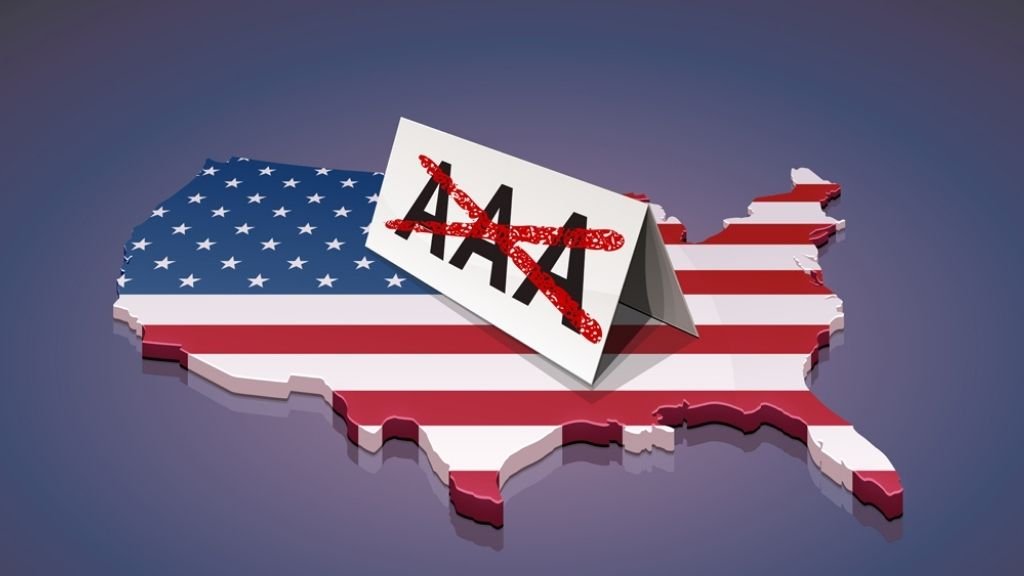
For a long time, the United States sat comfortably at the very top of global credit rankings. It was widely seen as the safest borrower in the world—a country whose ability to repay debt was never really in question. That reputation still largely holds today, with the U.S. retaining a triple-A (AAA) rating from one major global assessor. However, it is no longer unanimous, as the country is now generally placed a notch below the highest possible credit category.
Importantly, this adjustment does not suggest economic weakness or default risk. Instead, it reflects concerns around fiscal discipline, rising debt levels, and governance dynamics.
Rising Debt and Persistent Fiscal Deficits
A key driver behind the downgrade is the steady increase in government debt relative to economic output. Over time, spending has consistently exceeded revenue, resulting in sustained fiscal deficits.
Contributing factors include the following:
- Large emergency stimulus programs during economic crises
- Structural growth in entitlement obligations, such as healthcare and pensions
- Rising interest payments as global borrowing costs have increased
While the U.S. economy remains highly resilient, the long-term debt trajectory has raised concerns about sustainability.
Political Gridlock and Debt Ceiling Risks
Another important factor is recurring political disagreement over government funding and borrowing limits. These periodic standoffs have at times brought the country close to payment delays or temporary disruptions in government financing.
Even though the U.S. has always met its obligations, the repeated brinkmanship has raised uncomfortable questions about predictability. From a risk perspective, even the possibility of delays matters.
Reduced Fiscal Flexibility Over Time
The structure of U.S. public finances has also shifted. A growing portion of government spending is now mandatory or tied to debt servicing, leaving less flexibility for discretionary fiscal policy.
This creates three long-term pressures:
- Limited room to respond to future shocks
- Rising cost of servicing accumulated debt
- Difficulty achieving meaningful deficit reduction without political consensus
These factors collectively weaken long-term fiscal flexibility.
Governance and Policy Predictability
Although U.S. institutions remain strong and highly credible, credit assessments increasingly emphasise the predictability of fiscal policy.
Concerns center on:
- Repeated last-minute fiscal negotiations
- Increasing political polarization affecting budget decisions
- Uncertainty around long-term fiscal reform implementation
The issue is not institutional failure, but rather reduced policy stability compared to historical norms.
Why the U.S. Still Retains Exceptional Credit Strength
Despite the downgrade from the highest tier, the United States remains one of the strongest sovereign borrowers globally. Its credit strength is supported by:
- The size and diversity of its economy
- The U.S. dollar’s role as the global reserve currency
- Deep, liquid, and highly trusted capital markets
- Strong monetary policy credibility and an independent central banking system
The United States did not lose its top credit standing because of economic fragility or repayment risk. Instead, the change reflects concerns about long-term fiscal sustainability and recurring political challenges in managing government debt.
Ultimately, the adjustment represents a reassessment of fiscal discipline and governance predictability, not a loss of economic dominance.












Leave A Comment